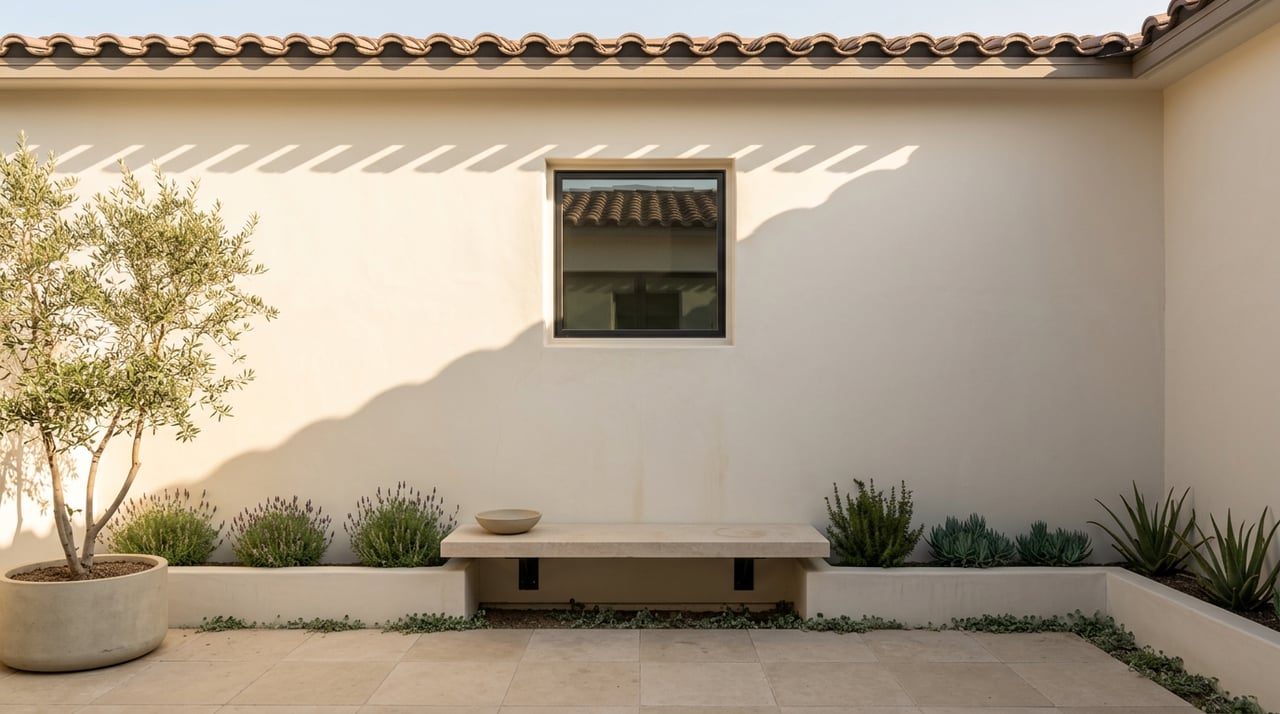
What A San Juan Capistrano Horse Property Actually Is (And Why The 2026 Market Rewards Buyers Who Know The Difference)
August 6, 2026
August 6, 2026
A buyer walks a two-acre lot off Ortega Highway on a Saturday morning. Level pad, mature oaks, room for a barn, an arena, and a paddock. The listing describes it as a "horse property." The seller has never owned a horse. Neither has the listing agent. The buyer writes the offer, closes, moves in, orders three horses trailered up from San Diego, and receives a cease-and-desist from code enforcement within a month. The land was zoned for horses in the buyer's imagination and nowhere else.
That is the friction hiding inside the phrase "horse property" in San Juan Capistrano. It is a legal status, not a lot size. In a slower 2026 market, where citywide inventory is sitting on the market for a median of 79 days as of July 2026 per Movoto's tracking, buyers finally have room to verify that status before they compete. The ones who do are the ones capturing the real value in this segment. The ones who don't are the ones staring at a code violation, an insurance rider they didn't budget for, or a resale problem three years out.
California cities treat horses as livestock, and livestock require a specific municipal designation to live on residential land. In practice that means either an Animal-Keeping Overlay attached to the parcel or explicit agricultural or equestrian zoning. Without that designation, a 40,000 square foot lot is a residential lot with a lot of grass. The city can and does enforce.
San Juan Capistrano's animal-related provisions are adopted from the Codified Ordinances of Orange County, layered with local amendments and administered under the city's Municipal Code Title 6, Chapter 1. Fine structures escalate quickly: $250 for a first offense, up to $403 for a sixth offense within twelve months. That is the enforcement backbone. What matters for a buyer is not the fine, it is the fact that the schedule exists, which means the city is prepared to use it.
Layered on top is the animal-to-acreage ratio. In South County equestrian enclaves the common rule of thumb is one horse per 10,000 square feet of usable lot area, roughly two to four horses per acre depending on which specific ordinance and topography govern the parcel. "Usable" is the operative word. A steep back slope reduces the count. A drainage easement reduces it. A recorded structure envelope reduces it. A buyer targeting three or four horses on 1.5 acres in the wrong sub-zone can legally end up with two.
Then there is the state layer, which is where most out-of-area buyers get surprised. Every equestrian property in California operates under the eye of the Regional Water Quality Control Board. Manure management, wash-rack runoff, and stormwater compliance are not optional and not cheap. A working boarding barn without a compliant manure plan is a liability on a disclosure package, not an amenity.
Citywide median numbers do not describe this segment well. As of July 2026, Movoto's tracking put the San Juan Capistrano median list at $1.64 million with 79 median days on market. Redfin's March 2026 figures for ZIP 92675 showed a detached median sold price of roughly $1.805 million across 17 sales. The listing side told a different story: Realtor.com's median list in the same ZIP was $2.59 million.
That gap between $1.8 million and $2.59 million is not noise. It is the shape of a bimodal market. Recent detached sales in 92675 have ranged from $880,000 to $5.75 million, with clusters at both ends and thinner activity in the middle. The horse property tier does most of its work above the median. LandSearch's inventory snapshot showed only three actively marketed equestrian properties near the city, averaging around $4.99 million and $225,701 per acre.
What a buyer actually pays for above the ZIP median is not square footage. It is verified legal use, functional infrastructure, and defensible trail access. Here is how those tiers usually sort:
| Tier | Approximate range | What the price is buying |
|---|---|---|
| Residential-with-room | $1.4M – $2.2M | Larger lot, no overlay, cannot keep horses on-site |
| Overlay-eligible without infrastructure | $2.0M – $3.5M | Legal use, no barn or arena yet, RWQCB plan owed |
| Turnkey equestrian estate | $3.5M – $7M+ | Barn, arena, wash rack, compliant drainage, trail gate |
A buyer who reads the ZIP median as a single number and offers accordingly will either overpay for tier one thinking it is tier two, or underprice tier three and lose it.
Trail adjacency is the other line item buyers routinely misread. Homes near the San Juan Creek Trail and the Los Rios Park trails tend to trade at premiums that local brokers have long estimated in the 10 to 20 percent range over comparable homes without trail access. That premium is real when the easement is real.
It is not always real. In August 2025 the San Juan Capistrano Planning Commission moved to vacate an unimproved equestrian easement that ran through a group of nine residential parcels, on the finding that the easement had never been improved as a trail, connected to no other trails, and no longer served a public purpose. That resolution is a useful reminder for buyers: an easement drawn on a plat map is not the same as a usable path to a bridle network. A parcel can carry the encumbrance without delivering the amenity, and the city can and will remove the encumbrance when it goes unused.
For a buyer, this means the trail question is a two-part test. Is there a recorded easement, and does it actually reach the network that the listing implies? The Hunt Club, the historic anchor of horse-oriented residential planning in the city under Specific Plan 77-01, was designed around that connectivity. Newer subdivisions marketed as horse-friendly sometimes were not.
In a fast market, buyers waive contingencies to win. In a slower market, contingencies become the entire game. With citywide median days on market at 79 in July 2026, and the equestrian tier moving even more slowly given its thinner buyer pool, sellers of horse-adjacent property are absorbing more diligence than they did two years ago. That is leverage a prepared buyer can use.
The verification sequence I run before an offer on any parcel marketed as a horse property in San Juan Capistrano:
None of that is exotic. It is the same diligence the San Juan Capistrano Equestrian Coalition and the resident boarding community would tell a new buyer to run. What has changed is that in 2026, sellers will wait for it. Two years ago, they would not.
If a single number captures the thesis of this market, it is this: 79 median days on market citywide as of July 2026, against a 92675 detached sold median of about $1.805 million in March 2026 and a listing median of $2.59 million. That gap is where buyers who understand the overlay, the ratio, the RWQCB, and the easement questions will do their best work this year. The gap will not stay this wide. It rarely does in South Orange County. But right now it exists, and it rewards preparation over speed.
Can I add an animal-keeping overlay to a lot that doesn't have one? Overlays are set by the city's zoning framework, not by owner request. Rezoning a residential parcel to permit horses is a legislative action with a hearing, a staff analysis, and no guaranteed outcome. Assume the overlay you buy is the overlay you keep.
Does The Hunt Club allow any horse count I want on a larger lot? No. Even within Specific Plan 77-01, the animal-to-acreage ratio and CC&R restrictions apply, and the HOA has its own architectural and use limits on barns, arenas, and fencing.
Is a boarding arrangement at a nearby facility like San Juan Capistrano Equestrian Center or the Rancho Mission Viejo Riding Park a substitute for on-site keeping? For many buyers, yes, and often at a lower total cost than building compliant infrastructure at home. That decision belongs in the underwriting for the purchase, not after closing.
If you are comparing a San Juan Capistrano parcel against another South Orange County option this quarter, the overlay, the ratio, the easement, and the RWQCB posture belong in the offer analysis, not the inspection period. I run that verification before writing, not after. To walk through a specific property or shortlist together, Angi Ciccarelli is available for a free consultation.
Stay up to date on the latest real estate trends.
Trust her to bring personal, top-tier real estate service in South Orange County. With her dedication, market expertise, and investor-savvy approach, she guides buyers and sellers carefully and confidently.
South Orange County, CA 92008